


Our advice to worshiper and parents as follows:
People who have returned from Category 1 specified countries/areas (China, South Korea, Italy, Iran) in the last 14 days should self-isolate. This includes avoiding attending an Jammah, education setting or work until 14 days after they return. Wear mask to protect others.
People who have returned from Category 2 specified countries/areas (Japan, Laos, Macau, Malaysia, Myanmar, Republic of Korea*, Singapore, Taiwan, Thailand, Vietna, Hong Kong, Cambodia) ( in the last 14 days, are advised to stay at home if they develop symptoms. All other pupils or students and staff should continue to school or university, including their siblings attending the same or a different school (unless advised not to by public health officials).
-
Information about the Coronavirus (COVID-19)
A coronavirus is a type of virus. As a group, coronaviruses are common across the world. COVID-19 is a new strain of coronavirus first identified in Wuhan City, China in January 2020.
The following symptoms may develop in the 14 days after exposure to someone who has COVID-19 infection:
- cough
- difficulty in breathing
- fever
2. How COVID-19 is spread
There are 2 routes by which people could become infected:
- secretions can be directly transferred into the mouths or noses of people who are nearby (within 2 metres) or could be inhaled into the lungs
- it is also possible that someone may become infected by touching a surface or object that has been contaminated with respiratory secretions and then touching their own mouth, nose, or eyes (such as touching a door knob or shaking hands then touching own face).
There is currently no good evidence that people who do not have symptoms are infectious to others
-
Preventing spread of infection
There is currently no vaccine to prevent COVID-19. The best way to prevent infection is to avoid being exposed to the virus.
There are general principles anyone can follow to help prevent the spread of respiratory viruses, including:
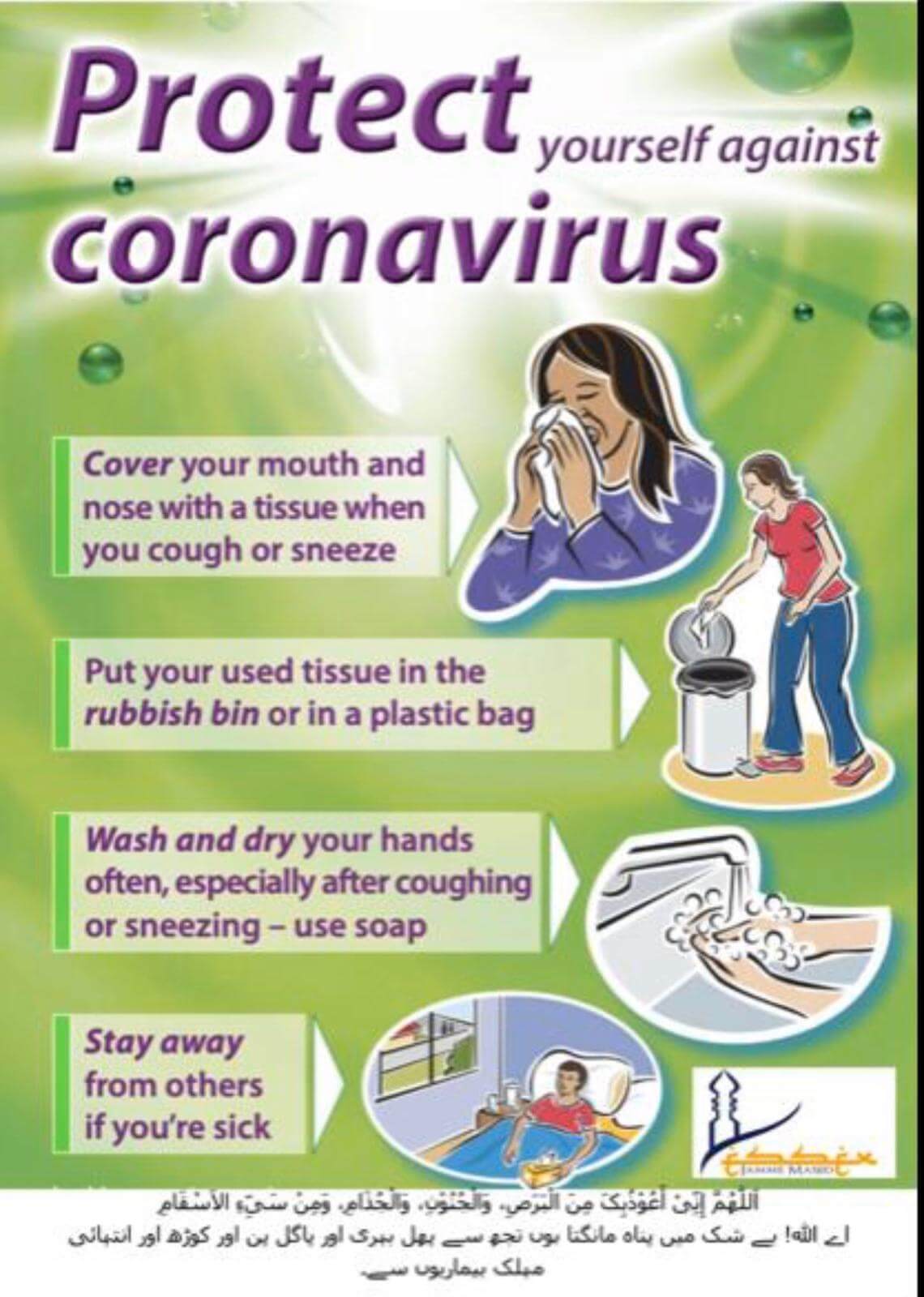
- washing your hands often – with soap and water, or use alcohol sanitiser if handwashing facilities are not available. This is particularly important after taking public transport
- covering your cough or sneeze with a tissue, then throwing the tissue in a bin. See Catch it, Bin it, Kill it
- people who feel unwell should stay at home and should not attend work or any education or childcare setting
- pupils, students, staff and visitors should wash their hands:
- before leaving home
- on arrival at school
- after using the toilet
- after breaks and sporting activities
- before food preparation
- before eating any food, including snacks
- before leaving school
- use an alcohol-based hand sanitiser that contains at least 60% alcohol if soap and water are not available
- avoid touching your eyes, nose, and mouth with unwashed hands
- avoid close contact with people who are unwell
- clean and disinfect frequently touched objects and surfaces
- if you are worried about your symptoms or those of a child or colleague, please call NHS 111. Do not go directly to your GP or other healthcare environment
- see further information on the Public Health England Blog and the NHS UK website.
4. Our advice to Worshiper, parents and students.
People who have returned from Category 1 specified countries/areas in the last 14 days should self-isolate. This includes avoiding attending an education setting or work until 14 days after they return. Wear mask to protect others.
People who have returned from Category 2 specified countries/areas in the last 14 days, are advised to stay at home if they develop symptoms. All other pupils or students and staff should continue to school or university, including their siblings attending the same or a different school (unless advised not to by public health officials).